Chapter 12: The Ethics of War: Dharmayuddha in Text and Practice
12.1 Introduction
Indian traditions have thought long and hard about the morality of war. The Bhagavadgītā, perhaps the most widely read Indian text, is set on a battlefield and begins with a warrior’s refusal to fight. The dharmaśāstras and the epics set out rules for “righteous war” (dharmayuddha) that protect non-combatants, the wounded and those who surrender. Buddhist and Jain teachers, committed to non-violence (ahiṃsā), questioned whether war could ever be justified, while Buddhist and Jain kings fought wars. Later, Islamic legal thought, Sikh teaching and Rajput codes of honour added their own perspectives.
It is common in popular writing to present dharmayuddha as a humane code that Indian armies faithfully observed, and to contrast it with the conduct of their enemies. This chapter takes a more careful view. It sets out the rules as the texts state them; it notes the exceptions that the same texts allow; it considers the evidence of what armies actually did; and it places the Hindu texts alongside Buddhist, Jain, Islamic and Sikh thought. Kaushik Roy’s Hinduism and the Ethics of Warfare in South Asia and the essays collected by Torkel Brekke are useful modern guides (Roy 2012; Brekke 2006), and Upinder Singh’s Political Violence in Ancient India is now the fullest study of how early Indian texts and inscriptions, Brahmanical, Buddhist and Jain, thought about the violence of kings, from punishment and war to the treatment of forest peoples (Singh 2017).
12.2 The Rules of Righteous War
12.2.1 The Mānava Dharmaśāstra
The clearest statement of the rules of fair fighting is in the seventh chapter of the Mānava Dharmaśāstra (MDh 7.90–93) (Olivelle 2005). A king fighting in battle, it says, should not strike his enemies with concealed weapons, or with barbed, poisoned or fire-tipped arrows. He should not kill an enemy who is standing on the ground when he himself is mounted; one who is impotent; one who joins his palms in supplication; one whose hair has come loose; one who is seated; or one who says “I am yours”. Nor should he kill a man who is asleep, without armour, naked, unarmed, not fighting, merely watching, or engaged in combat with someone else; nor one whose weapon is broken, who is in distress or grievously wounded, who is frightened, or who is fleeing. The text adds that a king should keep in mind the duty of good men.
12.2.2 The epic rules
The Mahābhārata gives similar rules in several places. At the beginning of the Bhīṣmaparvan, the leaders of the two armies agree on conventions for the coming battle: warriors are to fight only equals — chariot-fighter against chariot-fighter, horseman against horseman, foot-soldier against foot-soldier; those who withdraw or surrender, who are disarmed or engaged with another, are not to be struck; charioteers, drummers, conch-blowers, porters and those who bring up weapons are not to be attacked. Bhīṣma’s teaching in the Śāntiparvan contains further rules, including the treatment of the wounded enemy, who should be cared for and released (Fitzgerald 2004; Brockington 1998).
These rules have three principal concerns. They protect those who are not, or are no longer, fighting — the unarmed, the wounded, the fleeing, those who surrender, and those who serve the army but do not fight. They require fair combat between equals. And they forbid certain weapons, especially poisoned and barbed arrows, that cause needless suffering. They have often been compared with the principles of modern international humanitarian law, and the comparison is illuminating, provided one remembers that similar rules were formulated in many ancient and medieval cultures, and that the Indian rules, like the others, applied in the first instance to warriors of a particular class fighting each other.
12.2.3 Righteous conquest
The texts also counsel restraint once victory is won. In the Arthaśāstra the “righteous conqueror” is content with the submission of the defeated king (Chapter 7), and the Mānava Dharmaśāstra advises the conqueror to install a member of the defeated king’s family on the throne, to respect the customs of the conquered country, and to honour its gods and brahmins (MDh 7.201–203) (Olivelle 2005). Inscriptions confirm that many kings followed this practice, at least in part: Samudragupta’s Allahabad inscription boasts of capturing and then releasing the kings of the south, and medieval kings often reinstated defeated rivals as tributaries.
12.3 Restraint in the Tamil Tradition
The Tamil war poems of the Caṅkam anthologies also express ideas of restraint. One poem of the Puṟanāṉūṟu (PN 9) praises a Pāṇṭiya king who, before attacking, proclaims a warning so that cows, brahmins, women, the sick and those who have no sons to perform their funeral rites may take shelter before the fighting begins (Hart and Heifetz 1999). The poem presents this as the king’s righteousness. It is a striking parallel to the Sanskrit rules protecting non-combatants, expressed in a different literary and cultural tradition, and it shows that ideas of protected persons in war were widespread in early India. The same anthology, however, also celebrates the burning of enemy lands and the destruction of enemy towns, and it would be a mistake to read the poem as a description of ordinary practice.
12.4 The Exceptions in the Texts
12.4.1 The Arthaśāstra
The same tradition contains a very different voice. The Arthaśāstra accepts open war, concealed war and “silent war” as equally legitimate means to the king’s ends (Chapter 7). It recommends surprise attacks, night attacks, ambushes and feigned retreats; it describes the use of poisons and fire against enemy armies and forts; it advises the assassination of enemy kings and commanders by secret agents; and it recommends the subversion of enemy troops by bribery and rumour (Kangle 1960–1965; Olivelle 2013). The Arthaśāstra does not reject the rules of fair fighting so much as treat them as one option among many, to be followed when it is advantageous. The rule of thumb is victory at the least cost.
12.4.2 The dharmaśāstra itself
Even the Mānava Dharmaśāstra does not confine war to fair duels. In its discussion of campaigns it advises the king, when he has invaded an enemy’s territory, to besiege him, to harass his country, and to spoil his fodder, food, water and fuel; to destroy his tanks, ramparts and ditches; and to attack him unexpectedly and at night (MDh 7.195–196) (Olivelle 2005). It also recommends winning over the enemy’s subjects and officials. The rules of fair fighting governed conduct between warriors on the battlefield; they did not protect the enemy’s land and resources, which were legitimate targets.
12.4.3 The Mahābhārata’s dilemmas
The Mahābhārata itself shows the rules being broken, repeatedly and by both sides, and it makes the breaking of them one of its central moral problems (Brockington 1998; Hiltebeitel 1976):
-
Abhimanyu, Arjuna’s son, is trapped in the wheel-array and killed by several warriors attacking him together, in breach of the rule of single combat.
-
Bhīṣma, who will not fight Śikhaṇḍin because Śikhaṇḍin was born a woman, is brought down by Arjuna shooting from behind Śikhaṇḍin.
-
Droṇa is induced to lay down his arms by the false report that his son Aśvatthāman is dead; Yudhiṣṭhira, famous for his truthfulness, confirms the report with an equivocation (an elephant named Aśvatthāman has been killed), and his chariot, which had ridden above the ground, sinks to earth. Droṇa is then killed while sitting in meditation.
-
Karṇa is killed by Arjuna while trying to free his chariot wheel from the mud, at Kṛṣṇa’s urging.
-
Bhīma defeats Duryodhana in the mace duel by striking him on the thigh, below the navel, a foul blow by the rules of mace-fighting.
-
After the battle, Aśvatthāman enters the Pāṇḍava camp by night and massacres the sleeping warriors and the sons of Draupadī.
Kṛṣṇa, who counsels several of these acts, justifies them by the impossibility of defeating the Kaurava champions by fair means and by the Kauravas’ own earlier wrongs. The epic does not simply endorse or condemn him. It shows the victors stricken with grief and doubt: Yudhiṣṭhira wishes to renounce the kingdom he has won, and the whole Śāntiparvan is in part an attempt to reconcile him to the duties of a king (Fitzgerald 2004). The epic’s treatment of āpaddharma, “law in time of distress”, acknowledges that ordinary rules may give way in extremity. Rather than a simple code, the Mahābhārata offers a tragic reflection on the difficulty of keeping ethical limits in war.
12.4.4 The Bhagavadgītā
The Gītā’s argument is not about the rules of war but about whether to fight at all. Arjuna, seeing his kinsmen and teachers in the opposing army, refuses to fight. Kṛṣṇa answers that the self cannot be killed, that Arjuna’s duty as a warrior (svadharma) is to fight a righteous war, and that he should act without attachment to the fruits of action. In the famous words of the second chapter:
Bhagavadgītā 2.47
karmaṇy evādhikāras te mā phaleṣu kadā cana
mā karmaphalahetur bhūr mā te saṅgo ’stv akarmaṇi
You are entitled to the deed alone, and never to what it yields. Let the result of the deed not be what moves you, and do not cling to not acting.
For the ethics of war, the force of the verse is that it moves the test of right conduct from outcome to motive. A few verses earlier Kṛṣṇa tells Arjuna to hold pleasure and pain, gain and loss, victory and defeat as equal, and so to fight without incurring sin (BG 2.38). On this view a warrior is answerable for fighting from duty rather than from greed, hatred or fear; who wins the battle is not the measure of his righteousness.
The Gītā has been read in many ways: as a justification of the warrior’s duty, as an allegory of the inner struggle, and as a text on devotion. In the twentieth century B. G. Tilak read it as a call to action, including political action, while Gandhi read the battle as an allegory and drew from the Gītā a doctrine of non-violent, selfless action. Both readings have roots in the text’s long history of interpretation.
12.5 The Evidence of Practice
What did armies actually do? The evidence is mixed, and it does not support a picture of uniform restraint.
On the side of restraint, there are Megasthenes’ report that Indian farmers continued to work their fields while armies fought nearby — an idealised generalisation, but perhaps reflecting a real convention — and many inscriptions in which kings boast of restoring defeated rivals and protecting brahmins and temples. Treaties, truces and the ransoming of prisoners are well attested.
On the other side, kings of every period boasted of destruction. Aśoka’s Thirteenth Rock Edict records the death and deportation of hundreds of thousands in Kaliṅga (Hultzsch 1925). The inscriptions of the Pallavas, Cāḷukyas, Rāṣṭrakūṭas and Cōḻas celebrate the burning of enemy capitals; Cōḻa armies sacked Anurādhapura and the Cāḷukya capital, and their inscriptions record the capture of enemy women. Kalhaṇa’s Rājataraṅgiṇī describes King Harṣa of Kashmir (r. 1089–1101) appointing an officer to despoil temple images for their metal. Captives were frequently enslaved, and the women of defeated households were taken as spoils. Rajput and other armies raided and burned villages, and the Maratha cavalry of the eighteenth century, which lived by levying contributions, was feared in Bengal and elsewhere for its devastation. None of this was unusual among pre-modern armies anywhere in the world.
The Turkic and Afghan conquerors of the eleventh to thirteenth centuries were often extremely destructive: the Ghaznavid raids plundered cities and temples, and the Persian chronicles record massacres and the enslavement of captives. But the same chronicles show the sultans also making treaties, accepting the submission of Indian chiefs and protecting their Hindu subjects, whom Islamic law in its Ḥanafī form came to treat as protected non-Muslims (dhimmī) (Jackson 1999; Eaton 2019). Attempts to divide Indian warfare into a restrained “Hindu” type and an unrestrained “Muslim” type do not survive comparison with the evidence. Restraint and brutality were both found on all sides, shaped more by the circumstances of particular wars than by religion.
12.6 Aśoka’s Dhamma and the Limits of Remorse
Aśoka’s Thirteenth Rock Edict is the most famous Indian statement of remorse for war, and it deserves a closer reading (Hultzsch 1925; Thapar 1961). Aśoka records the conquest of Kaliṅga, the numbers deported, killed and dead, and says that he now feels intense regret, because the conquest of a country involves killing, death and deportation, and because those who suffer include brahmins, ascetics and householders who practise virtue, and their friends, relatives and kin. He declares that he now considers “conquest by dhamma” the chief conquest, and he lists the kings of the Hellenistic world — Antiochus, Ptolemy, Antigonus, Magas and Alexander — among those whom his dhamma has reached.
The edict also contains a warning. Aśoka tells the forest peoples (aṭavi) within his dominions that he is willing to forgive them as far as forgiveness is possible, but that he also has power, and that they should be ashamed of their wrongdoing so as not to be killed. He asks his descendants not to seek new conquests, or, if they do, to practise forbearance and light punishment. In the separate edicts inscribed in Kaliṅga itself, which omit the account of the war’s casualties (Figure 12.1), Aśoka instructs his officials to treat the people justly and to avoid arbitrary imprisonment and torture.
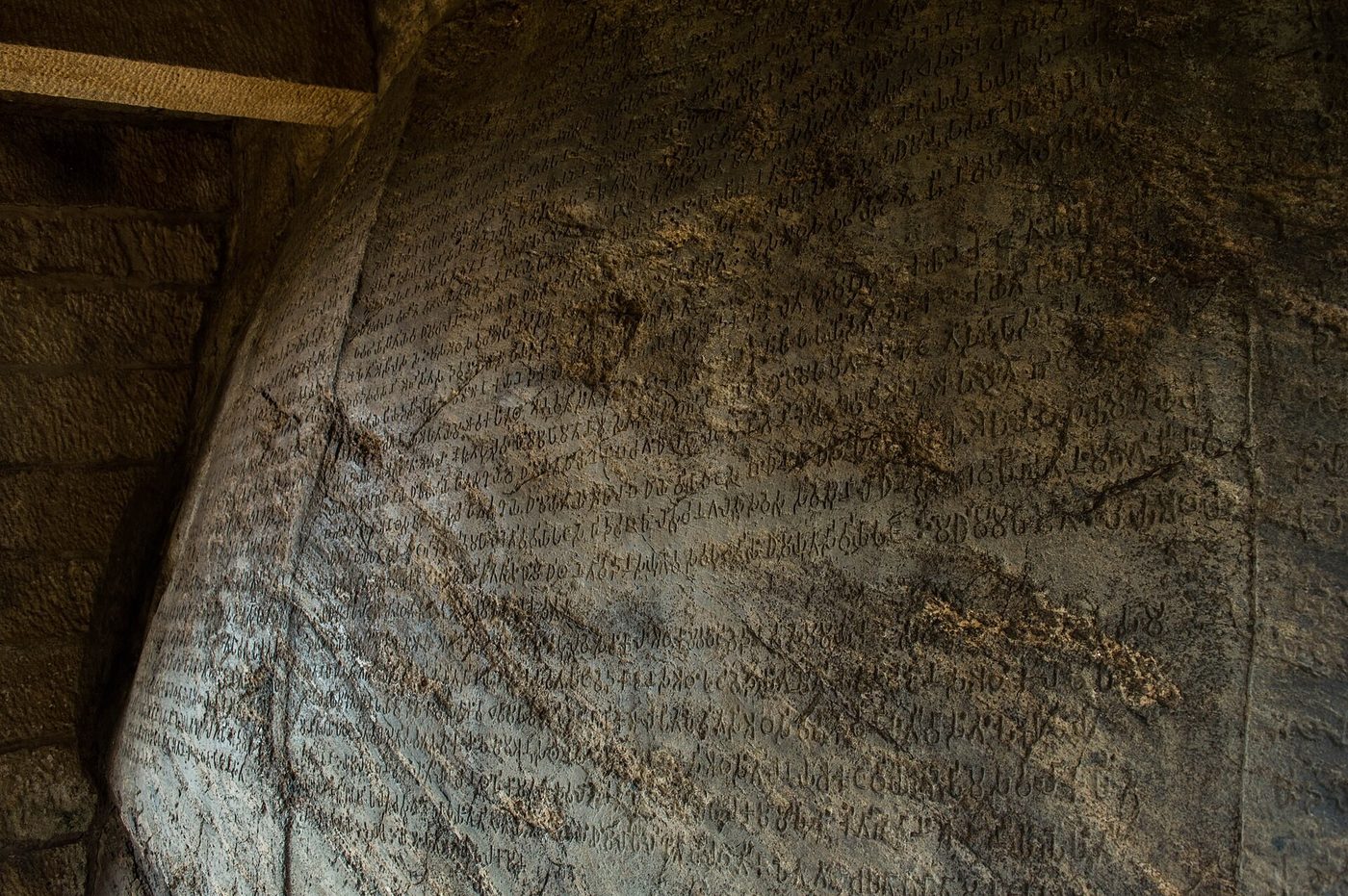

Aśoka’s remorse was genuine and unusual, but it did not lead him to disband his army or to renounce coercion. His policy is better described as a renunciation of further conquest combined with an attempt to govern by moral persuasion, backed by the power of the state. Upinder Singh’s study places the edicts within this tension between the ideal of non-violence and the violence that kingship required (Singh 2017).
12.7 Protection of Refugees and Safe Conduct
One of the strongest norms of Indian warrior ethics was the protection of those who sought refuge (śaraṇāgata). The Rāmāyaṇa’s Rāma receives Rāvaṇa’s brother Vibhīṣaṇa when he comes to seek protection, declaring it his duty to protect anyone who seeks refuge. Medieval Rajput tradition celebrated Hammīra of Ranthambhor for refusing to surrender Mongol fugitives who had taken refuge with him, at the cost of his kingdom (Chapter 8). Islamic tradition, too, recognised the grant of safe conduct (amān), which bound the giver.
Promises of safe conduct were nevertheless often broken. The Sikh tradition remembers the oaths broken at Anandpur in 1704–5, when Guru Gobind Singh’s followers were attacked after leaving the town on a promise of safety. Kalhaṇa records similar betrayals in Kashmir, and the chronicles of every period contain examples of envoys seized, prisoners killed and agreements disregarded. The importance attached to such promises in literature is a sign both of their value and of their fragility.
12.8 The Treatment of Captives
The texts prescribe the humane treatment of captured warriors: the rules in the Mahābhārata require that a wounded or captured enemy be cared for and eventually released. In practice the treatment of captives varied greatly. Defeated kings were often reinstated as tributaries; prisoners of rank could be ransomed or exchanged; ordinary captives, including women and children, were frequently enslaved, by the armies of the Delhi sultans, by Rajput and Maratha armies, and by the Portuguese. Rebels and enemies who had broken their submission were often executed with exemplary cruelty, as with the execution of the Maratha king Sambhājī by Aurangzeb in 1689 and of the Sikh leader Banda Singh Bahādur and his followers at Delhi in 1716. Such acts were intended to deter others, and they were remembered for generations as atrocities by the communities that suffered them.
12.9 War and the Common People
The sufferings of ordinary people in war appear only occasionally in the sources, which were written by and for elites. Yet there are glimpses. Kalhaṇa describes the famines and destruction caused by the civil wars of Kashmir. Persian chroniclers note the devastation of the countryside by passing armies. European travellers in the seventeenth and eighteenth centuries describe villages abandoned at the approach of armies, crops trampled and requisitioned, and the miseries of the camp-followers. The Maratha cavalry raids into Bengal in the 1740s, known as the bargi raids, were remembered in Bengali poetry and lullabies for the terror they caused. The rules of righteous war, which protected cultivators and non-combatants in principle, were often ignored when armies needed to feed themselves or to punish a recalcitrant population.
Two episodes from the Mughal Deccan show how war and hunger combined. In 1630–32, when the rains failed in the Deccan and Gujarat, Shāh Jahān’s court and armies were encamped at Burhanpur for the war against Ahmadnagar and the rebel noble Khān Jahān Lodī. The official history of the reign describes the famine at length — the dead in the streets, the starving reduced to eating whatever they could find, the emperor’s soup kitchens and remissions of revenue — and the English and Dutch merchants at Surat reported mass mortality in their letters. Drought was the cause, but the presence of great armies, which bought up grain and fodder and moved through the stricken districts, deepened the disaster (Richards 1993). Seventy years later, the long war between Aurangzeb and the Marathas (Section 9.16) brought a different kind of ruin. Bhīmsen, a Kāyastha officer in Mughal service who wrote a Persian memoir of the war, the Nuskha-i Dilkushā, describes districts laid waste by both armies, cultivators who abandoned their fields because whatever they grew would be taken, roads made unsafe by raiders, and the hunger and disease of the imperial camp itself. His account, from an officer of the imperial side who was nevertheless appalled by what he saw, is one of the most direct statements in the sources of the cost of war to those who did not fight it.
The point is not that Indian armies were especially destructive. The armies of the Thirty Years’ War in Germany, which were also largely hired and often unpaid, did comparable damage. It is that the protection which the normative texts extend to cultivators depended on conditions — regular supply, paid soldiers, a short campaign — that were rarely met, and that the military labour market described in Chapter 17 made plunder a substitute for pay whenever the treasury failed.
12.10 Loyalty unto Death: Bodyguards and Self-Sacrifice
A distinctive and disturbing feature of warrior ethics in medieval south India was the vow of personal loyalty unto death. Cōḻa inscriptions mention regiments called vēḷaikkārar, whose members were bound by a vow to protect the king and, according to some interpretations, to die with him (Nilakanta Sastri 1955). In Karnataka, inscriptions and hero-stones record retainers called garuḍa or leṅka, who vowed to share their lord’s fate and in some cases killed themselves on his death. Some hero-stones in Tamil Nadu and Karnataka depict men cutting off their own heads as an offering to the goddess, sometimes to fulfil a vow for the success of their lord. These practices express an ideal of absolute personal loyalty that was celebrated in inscriptions and poetry. They also show how warrior ethics could demand the sacrifice of the individual in ways that modern readers may find hard to accept, and they belong to the same complex of values as the Rajput sākā and jauhar (Section 12.15).
12.11 Temples, Images and the Politics of Conquest
The destruction and plunder of temples in war is one of the most emotive subjects in Indian history. The evidence shows that temples were attacked by conquerors of different faiths, and that their reasons were usually political as well as religious. Temples were rich, and plunder financed armies; royal temples were also symbols of the sovereignty of the dynasties that built them, so that their desecration signalled the end of a ruler’s authority.
Indian kings before the arrival of Islam carried off the images of defeated rivals’ temples as trophies: inscriptions and chronicles record that Cōḻa armies took images from the Cāḷukya country and installed them in their own territory, and Kalhaṇa records King Harṣa of Kashmir melting down temple images for their metal. The Ghaznavid raids of the eleventh century plundered temples on a large scale, and the Persian chroniclers praised them as acts of religious war. The Delhi sultans and later rulers destroyed temples in newly conquered territories, especially those associated with enemy dynasties, while generally leaving the temples of submissive subjects alone; Richard Eaton has argued that the destruction of temples by Indo-Muslim rulers was concentrated at moments of conquest and rebellion and was connected with the defeat of particular rulers (Eaton 2019).
Islamic law as applied in India, codified under Aurangzeb in the Fatāwā-yi ʿĀlamgīrī, recognised non-Muslim subjects as protected people who paid the poll-tax (jizya); in principle it forbade the destruction of existing places of worship of protected subjects, though it restricted the building of new ones. Practice varied greatly between rulers and periods: Akbar abolished the jizya in 1564, and Aurangzeb reimposed it in 1679. Neither the claim that Indo-Muslim rulers systematically destroyed all temples nor the claim that they never did so is supported by the evidence. The subject is best approached, as Eaton suggests, by examining particular cases in their political context.
12.12 The Ethics of Espionage
The Arthaśāstra’s detailed instructions on secret agents, entrapment, poisoning and assassination (Chapter 7) raise a further ethical question: how did the Indian tradition regard covert action? The Arthaśāstra justifies its methods by their end, the protection of the king and the people, and it tends to recommend the harshest methods against those already guilty of treason or crime — the text speaks of using secret punishment against “thorns” who harm the kingdom. Later nīti works soften some of its recommendations, and the dharmaśāstras treat deceit as generally sinful, though permissible in certain emergencies. The literary tradition, in plays such as Viśākhadatta’s Mudrārākṣasa, celebrates the cleverness of Cāṇakya’s intrigues while also portraying their moral ambiguity. The tension between the needs of state security and the demands of morality, which modern democracies continue to face in the regulation of intelligence services, was thus already a subject of Indian political reflection.
12.13 Buddhist and Jain Perspectives
12.13.1 Buddhism
Buddhist teaching regards killing as a grave wrong and holds up non-violence as the ideal. The Pali discourses praise the righteous wheel-turning king (cakkavatti), who conquers the world through righteousness rather than force; in the Cakkavatti-sīhanāda Sutta of the Dīgha Nikāya (DN 26) the wheel-treasure rolls through the four quarters, and the kings of each region submit without battle and are told only to keep the moral precepts. The same discourse makes the decline of the world begin when a king fails to give wealth to the poor, so that poverty breeds theft, punishment and finally the slaughter of all against all. Aśoka’s “conquest by dhamma” reflects this ideal. The monastic code drew a practical line: the Vinaya forbids the ordination of a soldier in a king’s service, so that the order would not become a refuge from military duty. Buddhist kings fought wars nonetheless, and Buddhist chronicles sometimes justified them. The Sri Lankan Mahāvaṃsa, compiled in the fifth or sixth century, tells how King Duṭṭhagāmaṇī, after defeating the Tamil king Eḷāra, was troubled by the deaths he had caused, and was reassured by monks that the slaughter of unbelievers carried little demerit (Mahāvaṃsa 25) (Geiger 1912). Modern scholars have discussed this passage as an example of the tension between Buddhist ethics and the demands of kingship (Brekke 2006; Singh 2017).
12.13.2 Jainism
Jainism holds the most rigorous doctrine of non-violence of any Indian tradition, extending it to all living beings. But Jain householders were not monks, and Jain teachers distinguished between kinds of violence: intentional violence was forbidden, but violence in the course of one’s occupation or in defence (virodhī hiṃsā) could be unavoidable for a householder. Jain kings, ministers and generals — among them Cāmuṇḍarāya, general of the Gaṅga kings in the tenth century, who commissioned the colossal image of Bāhubali at Śravaṇabeḷagoḷa, and the thirteenth-century Gujarati ministers Vastupāla and Tejaḥpāla — led armies and fought wars. Jain literature retells the story of Bāhubali, who at the moment of victory over his brother renounced the world, as an image of the conquest of the self. In the ninth-century Ādipurāṇa of the Digambara teacher Jinasena the story is also a reflection on war. Bharata, the first universal emperor, conquers the quarters of the world, but when his brother refuses to submit the ministers on both sides propose that, to spare the armies, the brothers fight each other alone, in contests of staring, of water-fighting and of wrestling; Bāhubali wins them all, the emperor’s discus will not harm a kinsman, and the victor renounces the kingdom he has won. The Jain imagination thus accepted the conquering king as part of the world’s order while turning the climax of his war into a lesson in the futility of victory. Jain authors also wrote frankly on statecraft, as in Somadeva’s Nītivākyāmṛta (Section 7.3), and Upinder Singh has traced how Buddhist and Jain thinkers, while condemning violence, accepted a measure of it as part of royal duty (Singh 2017).
12.14 Islamic and Sikh Perspectives
12.14.1 Islamic law of war
The Islamic law of war (siyar), developed in the eighth and ninth centuries, distinguishes combatants from non-combatants and forbids the killing of women, children, the old and monks who take no part in fighting; it regulates the treatment of prisoners, the division of spoils and the terms on which non-Muslims could submit and become protected subjects paying a poll-tax (jizya). In India, Persian works on statecraft such as Fakhr-i Mudabbir’s Ādāb al-ḥarb wa’l-shajāʿa discussed the conduct of war, combining Islamic legal norms with the Persian tradition of advice to kings. In the fourteenth century Ẓiyāʾ al-Dīn Baranī’s Fatāwā-yi Jahāndārī went further: it argued that a sultan must sometimes govern by state regulations (ẓawābiṭ) of his own making where the sacred law did not suffice, and urged him to humble the unbelievers, while Baranī’s own history shows sultans who in practice made treaties with Hindu chiefs and employed them (Jackson 1999). In India the Ḥanafī jurists’ acceptance of Hindus as protected subjects (dhimmī) who paid the jizya turned the law of conquest into a law of rule over a non-Muslim majority (Section 12.11). As with the Sanskrit texts, practice often diverged from the norms, and chroniclers praised sultans for both piety and ferocity.
12.14.2 The Sikh Gurus
Sikh teaching took up arms reluctantly and with conditions. Guru Gobind Singh’s Persian letter to Aurangzeb, the Ẓafarnāma, written after the Mughal and hill chiefs’ forces had broken their oaths of safe conduct at Anandpur, contains a widely quoted couplet to the effect that when all other means have failed, it is right to take up the sword. The Khalsa’s codes of conduct (rahit) forbade the molestation of women and required protection of the weak (Grewal 1990; Dhavan 2011). Like other traditions, the Sikh one combined an ideal of just and limited war with the realities of a long and bitter conflict.
12.15 Honour, Death and Glory
Another strand of Indian warrior ethics concerned not the protection of the enemy but the warrior’s own honour. The epics promise heaven to the warrior who dies facing the enemy; the Gītā tells Arjuna that if he is killed he will gain heaven, and if he wins he will enjoy the earth (BG 2.37). Hero-stones show the dead warrior ascending to heaven. Rajput bardic poetry exalted the warrior who fought to the death rather than retreat or surrender, and the custom of the last charge (sākā) of the men of a fallen fort, accompanied by the jauhar of the women, became the supreme expression of this ethic. Modern scholarship has examined how these customs were celebrated and how they were imposed: the jauhar, often presented as the free choice of women, took place under extreme duress and in a social order that valued women’s “honour” above their lives (Chapter 16) (Sreenivasan 2007).
12.16 Rajput Honour and Its Costs
The Rajput ethic of honour, as celebrated in bardic literature and in later nationalist writing, emphasised loyalty to one’s lord, the refusal to retreat, the protection of those who sought refuge, and death rather than surrender. These values inspired remarkable acts of courage. They also had costs. The ideal of the last charge and the jauhar turned defeats into massacres; the emphasis on personal and clan honour made it difficult for Rajput rulers to co-operate with each other; and the code was applied selectively, since Rajput armies, like others, raided, plundered and took captives. Modern historians such as Ramya Sreenivasan have shown how the image of the honourable Rajput warrior was shaped over centuries by bards, by the needs of Rajput courts under Mughal and British rule, and by nationalist writers (Sreenivasan 2007; Talbot 2016). Understanding this history does not diminish the courage of individual warriors, but it helps to separate history from myth.
12.17 The Ethics of the Mercenary
A large part of the soldiers who fought in Indian wars were paid professionals who served whoever employed them — the hired troops (bhṛta) of the Arthaśāstra, the peasant soldiers of Kolff’s military labour market, the Afghan, Rajput, Purbiya and Maratha bands of the medieval and early modern periods, the European adventurers of the eighteenth century, and the sepoys of the East India Company (Kolff 1990). Their ethic was one of service and loyalty to the employer who paid them and gave them his salt, rather than loyalty to a cause, a religion or a nation. Changes of side when pay was not forthcoming, or when a better offer came, were common and were not always regarded as dishonourable. This ethic of service helps to explain both the flexibility of Indian armies and the ease with which the East India Company recruited Indian soldiers to conquer India. The moral world of the Indian soldier was shaped as much by the realities of employment as by the ideals of the texts (Chapter 17).
12.18 Violence in 1857
The rising of 1857 was marked by extreme violence on both sides. Rebels killed British officers, civilians, women and children at Meerut, Delhi and above all at Kanpur, where British women and children held captive were killed in the Bibighar in July 1857. The British response was ferocious: rebels and suspected rebels were hanged in large numbers, sometimes after summary trials or none at all; villages were burned; and some captured sepoys were executed by being blown from cannon. The violence of 1857 left deep scars on both British and Indian memory, and it shaped British policy in India for decades. Here, as in many wars before it, the laws of war, whether Indian or European, gave way once the conflict took on the character of rebellion and reprisal.
12.19 Non-Violence and War in Modern India
In the twentieth century, Mahatma Gandhi made non-violence (ahiṃsā) the basis of a mass political movement against British rule. His position on war was not simple. In the Boer War and the First World War he supported the British empire, organising an ambulance corps in South Africa and, in 1918, campaigning for Indian recruitment into the army, on the grounds that Indians who claimed the rights of citizens should accept its duties. Later he opposed participation in war and argued that non-violent resistance could be used even against invasion. His allegorical reading of the Bhagavadgītā (Section 12.4) was contested by other nationalists, including Tilak and Aurobindo (Roy 2012).
Independent India adopted a constitution and institutions that are not founded on any one religious tradition, and it ratified the Geneva Conventions of 1949. Its armed forces train their personnel in international humanitarian law. The traditions of dharmayuddha, Aśoka’s dhamma, Gandhian non-violence and the Sikh and Rajput codes of honour are frequently invoked in Indian military and political discourse, as sources of values and identity rather than as legal codes. Table 12.1 brings together the principal norms of war discussed in this chapter, with their sources and the exceptions or contrary evidence that the same traditions record.
| Norm | Principal sources | Exceptions and contrary evidence |
|---|---|---|
| Do not strike the unarmed, fleeing, wounded, sleeping or surrendering | MDh 7.91–93; Mahābhārata | Epic killings of Abhimanyu, Droṇa and Karṇa; the night massacre |
| No poisoned, barbed or fire-tipped arrows | MDh 7.90 | Arthaśāstra recommends poisons and incendiaries |
| Fight only equals | Mahābhārata (Bhīṣmaparvan conventions) | Multiple attackers on Abhimanyu; practice of armies |
| Protect non-combatants and those who serve the army | Mahābhārata; PN 9 | Plunder and enslavement recorded in inscriptions and chronicles |
| Spare the enemy’s land and people | Megasthenes (as an observation) | MDh 7.195–196: spoil fodder, water and fuel; destroy tanks |
| Restore the defeated king | AŚ 12.1; MDh 7.202–203; inscriptions | Annexations by many kingdoms; “demonic” conquerors |
| Keep promises of safe conduct | Epics; Islamic amān | Broken oaths at Anandpur; betrayals in Kashmir |
| Use force only after other means | MDh 7; epics | Arthaśāstra: use whichever means is most effective |
| Protect refugees (śaraṇāgata) | Rāmāyaṇa; Rajput tradition | Refugees surrendered or killed in many wars |
| Do not kill women, children, the old and monks | Islamic siyar | Massacres in conquests and sieges |
| Take up arms only when other means fail | Ẓafarnāma (Sikh tradition) | Long cycles of reprisal in the eighteenth century |
| Renounce conquest | Aśoka, Rock Edict XIII | Aśoka kept his army and warned the forest peoples |
12.20 Indian Ethics of War in Comparative Perspective
Indian ideas about the ethics of war can usefully be compared with those of other traditions, provided the comparison is made with care (Brekke 2006).
The Christian just war tradition.
In Latin Christianity, Augustine (fourth to fifth century) and later Thomas Aquinas (thirteenth century) developed a theory of the “just war”, which required a legitimate authority, a just cause and a right intention; later writers added conditions such as last resort and proportionality, and rules for the conduct of war (jus in bello), including the protection of non-combatants. The Indian texts address many of the same questions: who may make war (the king), for what reasons (the protection of the people and of dharma), and by what means. The Indian tradition gives more attention than the early Christian one to the rules of combat between warriors, and less to the theory of legitimate authority, which it takes for granted in the figure of the king.
Islamic thought.
The Islamic law of war (siyar) distinguishes between kinds of war, regulates the treatment of non-combatants, prisoners and property, and defines the conditions under which non-Muslims could live under Muslim rule as protected subjects. Like the Sanskrit texts, it combines an ideal of regulated warfare with recognition of the needs of states, and like them it was applied variably in practice. Persian works on statecraft composed in India drew both on Islamic law and on the Persian tradition of advice to kings, which in many respects resembles the Indian nīti literature in its pragmatism.
Chinese thought.
Classical Chinese thinkers debated war from many perspectives: Confucians emphasised the moral authority of the ruler and the welfare of the people, Mohists condemned offensive war, and military writers such as Sunzi analysed war as an instrument of state. The range of Indian views — from the pragmatism of the Arthaśāstra to the rules of the dharmaśāstras and the non-violence of the Jains — is comparable in breadth.
The comparison shows that the questions raised by war were similar across civilisations and that many of the answers were too. It also highlights the distinctive features of the Indian tradition: its systematic treatment of the warrior’s duty (svadharma) in the Gītā, its tragic reflection in the Mahābhārata on the moral costs of victory, Aśoka’s public remorse, and the radical non-violence of the Jain tradition. These are contributions to the world’s moral reflection on war that deserve to be known on their own terms, without exaggerated claims of priority.
12.21 Indian Traditions and the Modern Laws of War
Since the nineteenth century, Indian scholars and statesmen have pointed to the rules of dharmayuddha as evidence that India possessed an indigenous tradition of humanitarian restraint in war. The comparison with modern international humanitarian law is legitimate and instructive. The protection of non-combatants, of the wounded and of those who surrender, the prohibition of perfidy and of weapons causing unnecessary suffering, and the idea that war must be declared and conducted under rules, all have parallels in the Indian texts.
The comparison should not be turned into a claim of priority or uniqueness. Ancient Greek, Roman, Chinese, Jewish, Christian and Islamic traditions also formulated rules restricting the conduct of war, and in none of them were the rules consistently observed. The Indian texts themselves, as this chapter has shown, also recommend deception, devastation and assassination. The value of the Indian tradition lies less in any claim to have anticipated the Geneva Conventions than in the depth and honesty of its reflection — above all in the Mahābhārata — on the moral costs of war, on the difficulty of keeping limits in extremity, and on the grief that follows even a just victory (Roy 2012).
Further Reading
-
Singh (2017): violence, war and kingship in early Indian texts and inscriptions.
-
Roy (2012): Hindu traditions and the ethics of warfare from antiquity to the present.
-
Brekke (2006): essays on the ethics of war in Hindu, Buddhist, Islamic, Chinese and Japanese traditions.
-
Olivelle (2005): the Mānava Dharmaśāstra, with its rules of war.
-
Fitzgerald (2004): the Śāntiparvan in translation.
-
Hiltebeitel (1976): the battle books of the Mahābhārata and Kṛṣṇa’s role in them.